INFORMACIÓN GENERAL
EL ENCUENTRO
Ahora y buscando ampliar el trabajo de colaboración, la participación activa con pares investigadores y creadores, la difusión del trabajo de creación e investigación, se propone esta iniciativa que busca organizar un evento de intercambio y colaboración, de forma anual, con la intención de promover la investigación, creación, gestión, vinculación y difusión de ideas, experiencias y nuevos formas de interacción, que emanen de los CA, GC, GI y las RI.
No solo se propone un escenario para dialogar y nutrir proyectos, también se busca generar una mayor interacción con otras universidades, instituciones, Redes o Grupos nacionales o internacionales.
OBJETIVOS
- Promover la cooperación y el intercambio entre CA, GC y GI, a nivel nacional e internacional, mediante la vinculación y difusión de sus investigaciones, líneas de generación y aplicación del conocimiento, así como de sus proyectos de creación artística y cultural.
- Fomentar la investigación más allá de las fronteras disciplinares, incentivando la incorporación de metodologías, técnicas, herramientas y tecnologías que impulsen la innovación en los procesos de creación, investigación y enseñanza en artes y humanidades.
- Integrar una red de especialistas que favorezca la sinergia y fortalezca la producción, divulgación y difusión del conocimiento, tanto a nivel nacional como internacional.
- Impulsar la conformación de redes de colaboración orientadas al desarrollo de proyectos de investigación, creación e innovación que atiendan problemáticas sociales, contribuyendo a una retribución social pertinente y situada.
SEDE Y FORMAS DE PARTICIPACIÓN
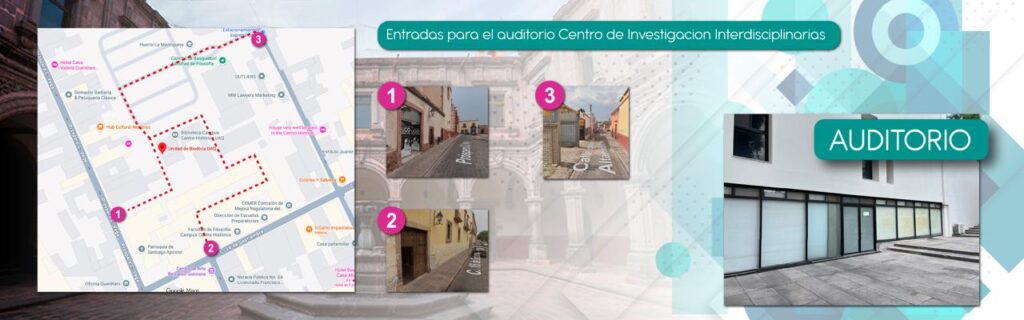
La segunda edición del Encuentro de Investigación y Creación en Artes y Humanidades se llevará a cabo los días 13 y 14 de octubre de 2026 en las instalaciones de la Facultad de Filosofía, Edificio Centro, de la Universidad Autónoma de Querétaro.
Se verificarán conferencias magistrales, las presentaciones de ponencias temáticas, sesiones de interacción e intercambio entre GC, CA, GI y RI, además de actividades para los estudiantes y actividades culturales, abiertas a todo el público.
PRESENTACIONES
SESIONES DE INTERACCIÓN
Cada CA, GC, GI o RI participará en una mesa de diálogo abierta y dinámica. Se realizará una ronda general de presentación en la que se proyectará una diapositiva con los datos generales del CA, GC, GI o RI, sus integrantes, la institución u organización a la que pertenecen y sus líneas de generación y aplicación del conocimiento, únicamente como referencia inicial.
A partir de ello, las sesiones se desarrollarán mediante dinámicas de interacción promovidas por preguntas detonantes planteadas por el moderador de cada mesa, así como por la participación libre de las y los asistentes. La intención es propiciar un espacio de diálogo, reflexión e intercambio de ideas. El secretario de cada mesa elaborará una breve relatoría, que se integrará como conclusiones de la misma.
PONENCIAS
Se podrán presentar trabajos vinculados con alguna de las cinco áreas temáticas y en modalidad grupal (un solo participante presenta, como representante del CA, GC, GI o RI). La extensión mínima será de 5 cuartillas incluyendo referencias, y máxima de a 8 cuartillas, incluyendo referencias. El proceso inicia con el envío de resúmenes (máximo 350 palabras, en español e inglés, con 5 a 7 palabras clave). Estos resúmenes se someterán a un comité evaluador que revisará la viabilidad de las propuestas y emitirá el dictamen correspondiente.
El evento dispondrá de dos bloques y horarios para la presentación de hasta 12 ponencias simultáneas, con el fin de que se presenten proyectos, programas, iniciativas o investigaciones que recién se han concluido o están en proceso y que se difunda y divulgue el trabajo de los participantes.
Las postulaciones se recibirán en una primera etapa en formato de resumen (350 palabras de acuerdo a la plantilla publicada en el sitio web). Aquellas propuestas cuyos temas coincidan con las áreas e intereses del evento serán evaluadas para su presentación. En caso de ser aceptado el resumen, y como requisito para presentar la ponencia, se deberá integrar la versión en extenso, la cual será sometida a una segunda evaluación y deberá ajustarse a los lineamientos editoriales y de contenido marcados por el Comité del eventos, los tiempos establecidos, tanto para su presentación en el evento, como para su posible incorporación en la memoria digital del mismo (memoria con ISBN).
Las sesiones de ponencias serán limitadas y se organizarán de acuerdo con las áreas temáticas del evento.
ÁREAS TEMÁTICAS DEL ENCUENTRO
Para la edición 2026 se proponen cinco áreas temáticas:
1.- Investigación–creación: procesos, cruces y metodologías
Esta área aborda la investigación–creación como un campo dinámico de producción de conocimiento, donde la práctica artística e intelectual se articula con procesos investigativos tanto sistemáticos como experimentales. Se buscan propuestas que reflexionen sobre metodologías, dispositivos, procesos de conceptualización y producción, así como sobre las formas en que la creación genera conocimiento y la investigación se transforma a partir de la práctica.
2.- Prácticas transdisciplinarias y articulaciones del conocimiento
Esta línea convoca a trabajos que exploren los cruces entre disciplinas en las artes, las humanidades y otros campos del conocimiento, promoviendo nuevas formas de colaboración e integración metodológica.
3.- Lenguajes, medios y nuevas materialidades
Se enfoca en los lenguajes, medios y recursos que configuran las prácticas contemporáneas, incluyendo narrativas, medios análogos y digitales, así como tecnologías emergentes.
4.- Arte, educación y construcción de lo social: memoria, territorio e imaginarios
Integra dimensiones pedagógicas, sociales y simbólicas, considerando procesos educativos, prácticas críticas y reflexiones sobre memoria, historia e imaginarios.
5.- Transformaciones, emergencias y prospectivas
Esta línea reúne trabajos que analicen las transformaciones contemporáneas de las artes, las humanidades y la cultura, así como la aparición de nuevos enfoques, problemáticas, prácticas y campos de conocimiento. Se consideran reflexiones sobre los impactos sociales, políticos, económicos, tecnológicos y ambientales que reconfiguran los modos de investigar, crear, enseñar, gestionar y habitar los territorios culturales.
De manera general, estas áreas temáticas están concebidas como un espacio abierto para que artistas, creadores, investigadores, gestores y estudiantes compartan reflexiones, expongan procesos de producción, presenten proyectos de investigación–creación o articulen posturas desde sus propias prácticas. En esta segunda edición, el Encuentro continúa privilegiando el intercambio de ideas y la participación de un número cada vez mayor de especialistas, favoreciendo una interacción más amplia y significativa entre disciplinas, enfoques y contextos. Se sostiene como eje el análisis crítico y creativo, con el propósito de ampliar las posibilidades de cada campo y fortalecer su interrelación. De este modo, se impulsa la consolidación de una red activa de trabajo, colaboración y producción, con incidencia social.
PREGUNTAS FRECUENTES
¿Tiene algún costo participar en el 1er Encuentro de Arte y Humanidades?
La inscripción a la red es independiente del 1er Encuentro de Arte y Humanidades, el cual es gratuito y está abierto a la participación de cualquier persona, aun cuando no se afilie. La recepción de resúmenes estará abierta hasta el 31 de agosto del 2026, y la recepción de fichas de CA, GC, GI o RI estará abierta hasta el 9 de septiembre del 2026.
Si deseo inscribirme a la red, ¿dónde debo hacerlo?
A partir del 30 de julio del 2026 se habilitará la liga de pago y se cerrará hasta una semana antes del evento. El costo es de $1,200.00 MXN por anualidad y podrá realizarse mediante el siguiente enlace: https://comunidad.uaq.mx:8011/InscripcionGeneral/Inscripcon.jsp?cc=88407
Es importante considerar que los bancos intermediarios o beneficiarios pueden aplicar comisiones adicionales sobre el monto enviado; dichos cargos son ajenos a la Universidad y a la cuenta receptora.
No se aceptarán transferencias fuera de las fechas estipuladas, siendo responsabilidad del participante conservar los comprobantes para el debido rastreo y verificación del pago.
En caso de requerir factura, ésta deberá solicitarse al momento de efectuar el pago o la transferencia.
EN CASO DE DUDAS
Para cualquier comunicación oficial, favor de escribir al correo arshuma.secu@uaq.edu.mx o comunicarse al 442-192-1200, extensiones 3400 y 34803.
GENERAL INFORMATION
THE MEETING
Now, seeking to expand collaborative work, active participation with peer researchers and creators, and the dissemination of creative and research work, this initiative proposes organizing an annual exchange and collaboration event, with the intention of promoting research, creation, management, outreach, and the dissemination of ideas, experiences, and new forms of interaction arising from ACs, CAs, IGs, and INs.
OBJECTIVES
- To promote cooperation and exchange among CAs, GCs, and GIs at the national and international levels, through linking and the dissemination of their research, lines of generation and application of knowledge, as well as their artistic and cultural creation projects.
- To foster research beyond disciplinary boundaries, encouraging the incorporation of methodologies, techniques, tools, and technologies that drive innovation in the processes of creation, research, and teaching in arts and humanities.
- To integrate a network of specialists that fosters synergy and strengthens the production, outreach, and dissemination of knowledge, both nationally and internationally.
- Encourage the formation of collaborative networks geared toward developing research, creation, and innovation projects that address social issues, contributing to relevant and situated social reciprocity.
VENUE AND FORMS OF PARTICIPATION
The second edition of the Arts and Humanities Research and Creation Encounter will take place on October 13 and 14, 2026 at the facilities of the School of Philosophy, City Centre Campus, of the Universidad Autónoma de Querétaro.
Keynote lectures, presentations of thematic papers, interaction and exchange sessions among CAs, ACs, IGs, and INs will take place, in addition to student activities and cultural events open to the general public.
PRESENTATIONS
INTERACTION SESSIONS
Each AC, CA, IG, or IN will participate in an open and dynamic discussion panel. A general introduction round will be held in which a slide displaying the general information of the AC, CA, IG, or IN, its members, the institution or organization to which they belong, and its lines of knowledge generation and application will be projected, solely as an initial reference.
From there, the sessions will proceed through interaction dynamics prompted by trigger questions posed by the moderator of each panel, as well as through open participation by attendees. The goal is to foster a space for dialogue, reflection, and exchange of ideas. The secretary of each panel will draft a brief report, which will be integrated as the panel’s conclusions.
TALKS
Works related to any of the five thematic areas may be submitted in a group format (a single participant presents as the representative of the AC, CA, IG, or IN). The length must be a minimum of 5 pages, including references, and a maximum of 8 pages, including references. The process begins with the submission of abstracts (maximum 350 words, in Spanish and English, with 5 to 7 keywords). These abstracts will be submitted to an evaluating committee that will review the viability of the proposals and issue the corresponding decision.
The event will feature two blocks and time slots for presenting up to 12 simultaneous talks, with the aim of presenting recently completed or ongoing projects, programs, initiatives, or research, and disseminating the work of the participants.
In the first stage, applications will be received in abstract format (350 words, according to the template published on the website). Proposals whose topics match the areas and interests of the event will be evaluated for presentation. If the abstract is accepted, and as a requirement to present the paper, the full-length version must be submitted; it will undergo a second evaluation and must adhere to the editorial and content guidelines established by the Event Committee, as well as the deadlines set for both its presentation at the event and its possible inclusion in the event’s digital proceedings (ISBN Record).
Paper presentation sessions will be limited and organized according to the event’s thematic areas.
THEMATIC AREAS OF THE ENCOUNTER
Five thematic areas are proposed for the 2026 edition:
1.- Research–Creation: Processes, Intersections, and Methodologies
This area addresses research–creation as a dynamic field of knowledge production, where artistic and intellectual practice is linked with both systematic and experimental research processes. Proposals are sought that reflect on methodologies, devices, processes of conceptualization, and production, as well as the ways in which creation generates knowledge and research is transformed through practice.
2.- Transdisciplinary Practices and Articulations of Knowledge
This track welcomes works that explore intersections among disciplines in the arts, humanities, and other fields of knowledge, promoting new forms of collaboration and methodological integration.
3.- Languages, Media, and New Materialities
It focuses on the languages, media, and resources that shape contemporary practices, including narratives, analog and digital media, as well as emerging technologies.
4.- Art, Education, and the Construction of the Social: Memory, Territory, and Imaginaries
It integrates pedagogical, social, and symbolic dimensions, considering educational processes, critical practices, and reflections on memory, history, and imaginaries.
5.- Transformations, Emergencies, and Outlooks
This track brings together works that analyze contemporary transformations in the arts, humanities, and culture, as well as the emergence of new approaches, problems, practices, and fields of knowledge. Reflections on the social, political, economic, technological, and environmental impacts that reconfigure the ways of researching, creating, teaching, managing, and inhabiting cultural spaces are considered.
In general, these thematic areas are conceived as an open space for artists, creators, researchers, managers, and students to share reflections, showcase production processes, present research–creation projects, or articulate positions stemming from their own practices. In this second edition, the Encounter continues to prioritize the exchange of ideas and the participation of an ever-growing number of specialists, fostering broader and more meaningful interaction among disciplines, approaches, and contexts. Critical and creative analysis remains the central axis, with the aim of expanding the possibilities of each field and strengthening their interrelation. In this way, the consolidation of an active network of work, collaboration, and production with social impact is promoted.
FREQUENTLY ASKED QUESTIONS
Registration for the network is independent of the 1st Arts and Humanities Encounter, which is free and open to anyone’s participation, even without joining the network. Abstract submissions will be open until August 31, 2026, and submissions of AC, CA, IG, or IN profile sheets will be open until September 9, 2026.
The payment link will be available starting on July 30, 2026, and will close one week before the event. The annual fee is $1,200.00 MXN and can be paid through the following link:
https://comunidad.uaq.mx:8011/InscripcionGeneral/Inscripcon.jsp?cc=88407
It is important to note that intermediary or beneficiary banks may apply additional fees to the transferred amount; such charges are unrelated to the University and the receiving account.
Transfers will not be accepted outside the stipulated dates, and it is the participant’s responsibility to keep the receipts for proper tracking and verification of the payment.
If an invoice is required, it must be requested at the time the payment or transfer is made.
IN CASE OF QUESTIONS
For any official communication, please write to arshuma.secu@uaq.edu.mx or call 442-192-1200, extensions 3400 and 34803.